Study: 91% of Americans Are Distracted Daily at Work
By Neal Taparia - Last Updated: 01/06/2026
The daily grind of working eight hours a day, five days a week, every week can feel mundane at times. Regardless of how busy or light your workload is, we all find ourselves getting distracted. Whether that distraction comes in the form of conversations with coworkers or playing a game of Solitaire on your phone, it can keep you from your work, and it may just keep you away much longer than you intended.
At Solitaired, we know that playing games all day is often more enticing than logging in and working on a spreadsheet, but unfortunately gaming doesn’t pay the bills for most people. Because of this, we decided to survey Americans to learn more about their distractions at work.
In addition to the activities that distract workers most, we also identified the industries in which workers are spending the most time on non-work tasks while on the clock. We also set out to learn which games are keeping people from getting their work done most often. Read on to learn more about our findings.
Key Takeaways
- Science and research workers are most likely to be distracted at work.
- Eating a snack and texting with friends and family are the most common activities Americans do on the clock.
- Solitaire, Wordle, and Candy Crush are the most distracting games at work.
- 63% of Americans say playing games during working hours helps them recharge and be more productive.
- 80% of Americans say they spend time on non-work tasks to take a mental break and relieve stress at work.
- 56% of Americans think they would do fewer non-work tasks on the clock if they had a shorter work week.
The Industries with the Most Distracted Workers
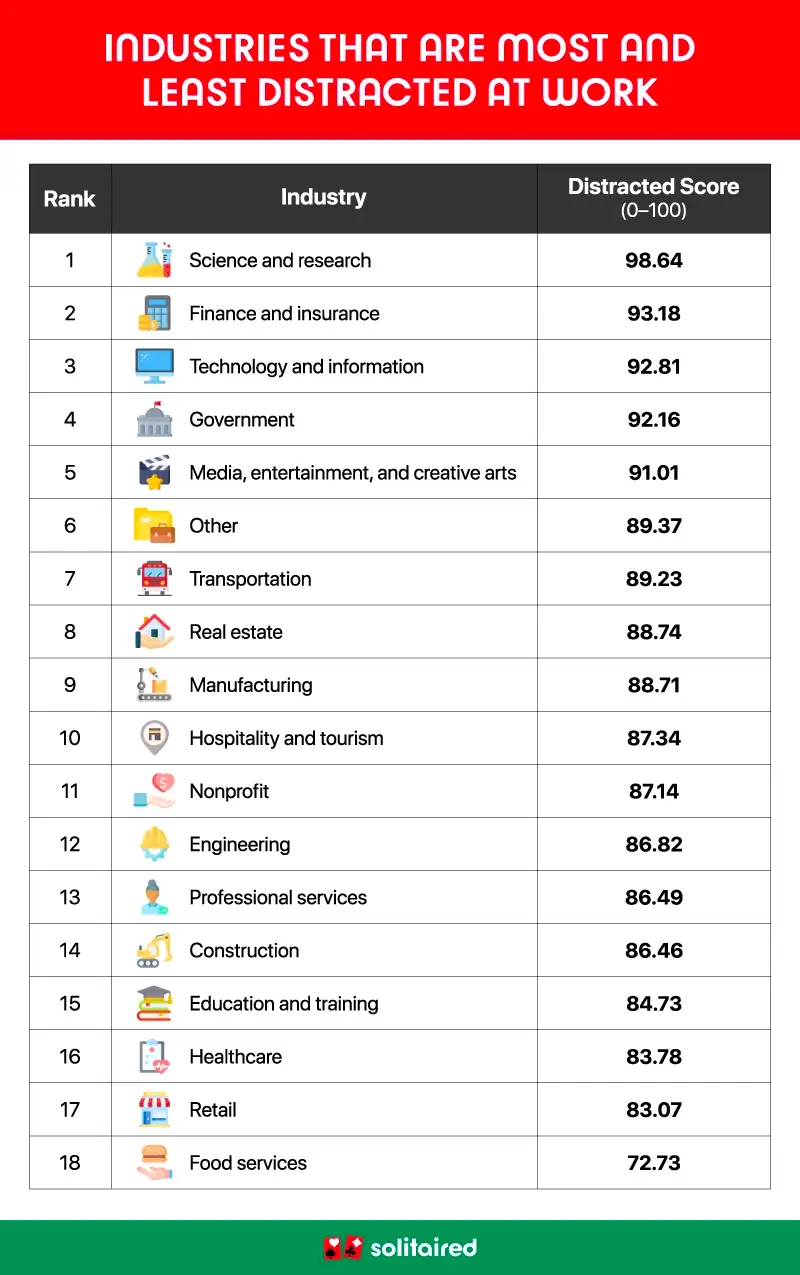
While the hours worked and the day-to-day tasks can look incredibly different from one industry to the next, one thing remains the same: Americans get sidetracked at work. When it comes to those who are most distracted, workers in the science and research industry earned a distracted score of 98.64 out of 100. Overall, those working in the science and research field are the most likely (45%) to spend more than one hour of work each day on non-work tasks.
Ranking second for the most distracted workers is the finance and insurance industry with a score of 93.18 out of 100. One of the most popular activities Americans find themselves turning to during work hours is playing games, which more than two thirds of finance and insurance workers say helps them feel recharged and be more productive.
Coming in third place are those in the technology and information industry (92.81), followed closely by those working for the government with a distracted score of 92.16 out of 100. While some workers limit their breaks to lunch or visits to the restroom, a third of government employees say they take a break at least once an hour during their workdays.
Overall, we discovered that 80% of Americans say they allow themselves to be distracted from their work to take a mental break and relieve stress at work. When looking at these habits among the generations, it was Millennials who were most likely to be distracted while on the clock. Similarly, hybrid workers are more likely than remote or on-site employees to be distracted while working.
Activities Americans Are Doing While on the Clock
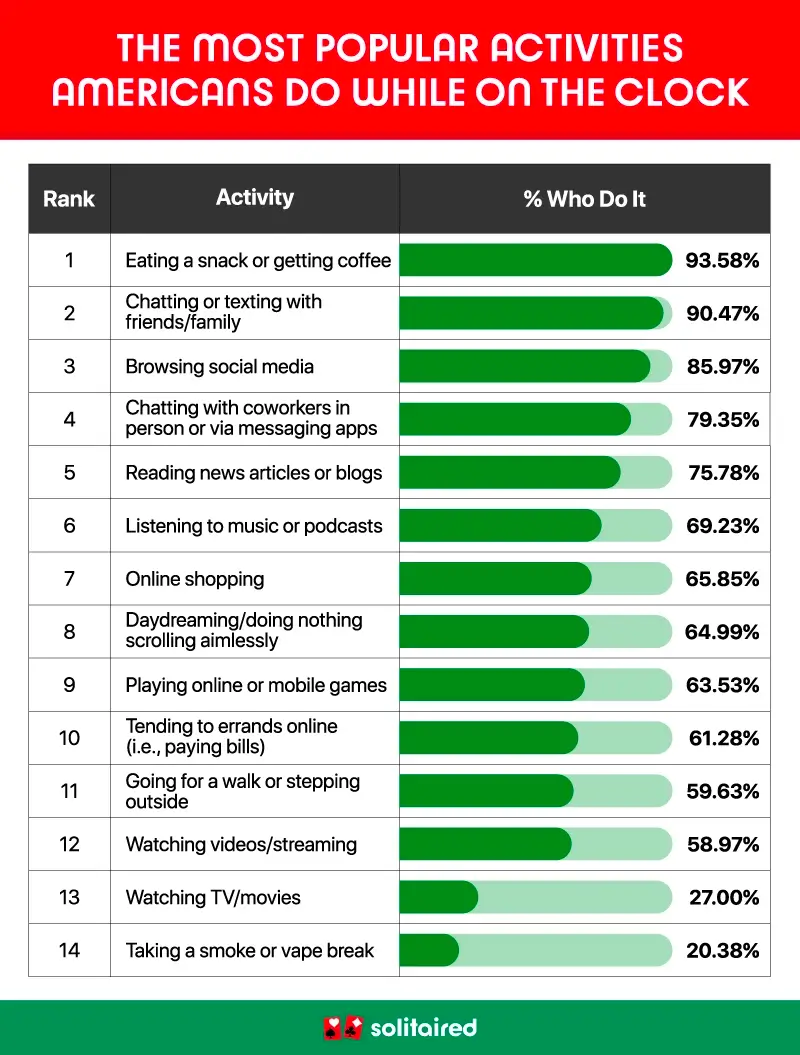
With nearly 1 in 4 workers taking a break at least once an hour to do something non-work related, we wanted to learn more about the activities that command the attention of employees. Up first is eating a snack or getting coffee, which 94% of workers say they do when stepping away from their tasks.
In second place with 90% of workers reporting it is chatting or texting with friends or family. This is followed by browsing social media which is a common non-work-related activity among 86% of Americans while on the clock. While taking a quick moment to respond to a text or check a friend’s Instagram story may seem like a brief task that won’t impact your work, it can easily turn into a distraction that keeps you inactive for longer than you intended.
The same could be said for the fourth most common activity, chatting with coworkers in person or via messaging apps, which was reported by 79% of workers. What may have started as a quick question about a project can easily turn into a 30-minute conversation about your plans for the weekend if you allow yourself to become preoccupied with a chat rather than your tasks.
One of the biggest examples of a task keeping you away from your work longer than intended is playing games at work, which ranks ninth with nearly two thirds of Americans saying they do it. Although a quick game of Solitaire can seem like a brief break from the mundane routine of your workday, the desire to play just one more game can keep you away from your duties for much more than a short break. In fact, we discovered that nearly 2 in 5 Americans admit they sometimes play games at work longer than they intended while they are supposed to be working.
The Most Distracting Games at Work
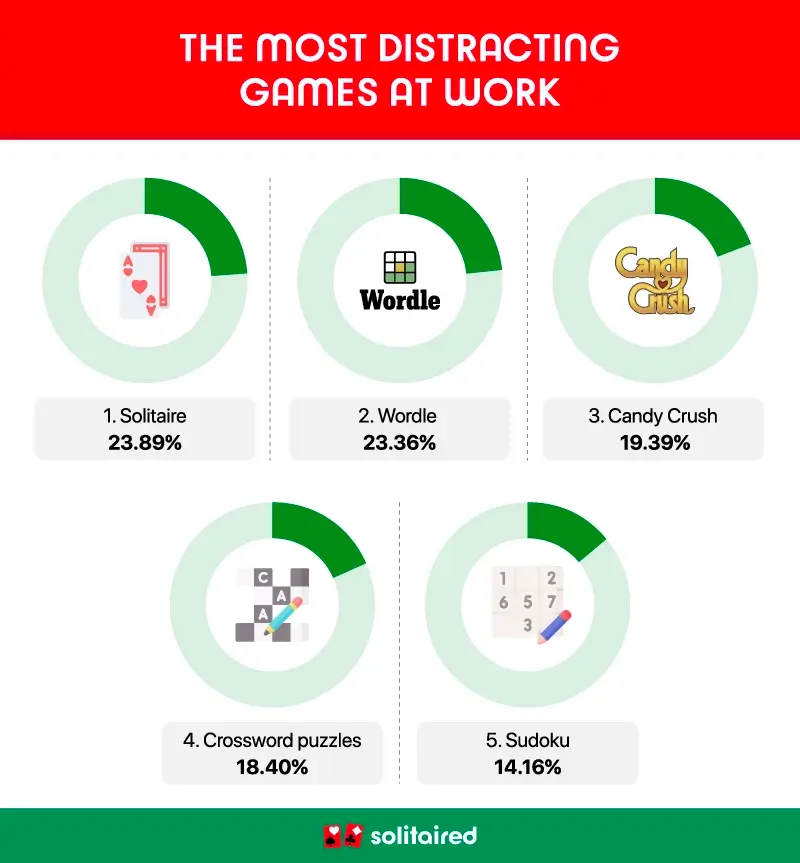
After learning that Americans are frequently distracted by games while on the clock, we wanted to gain insight into which games are keeping workers away from their work most often. Leading the way, nearly 1 in 4 people report they play Solitaire while on the clock.
While some games are offered any time, others are only available on a daily basis. This is the case for our second most popular game for workers, Wordle (23%). While some players find it easy to guess the five-letter word of the day, others struggle, just staring at letters while work goes unfinished.
Coming in third place is a game that has held many Americans’ attention both in and outside of the office: Candy Crush (19%). This is followed by crossword puzzles (18%), Sudoku (14%), and Tetris (10%). Although the distracting games can vary from one workplace to the next, we found that 63% of people say playing games during working hours helps them feel recharged and be more productive. So as long as your work gets done, we’re sure one quick game won’t hurt too much.
Top Reasons Americans Distract Themselves at Work
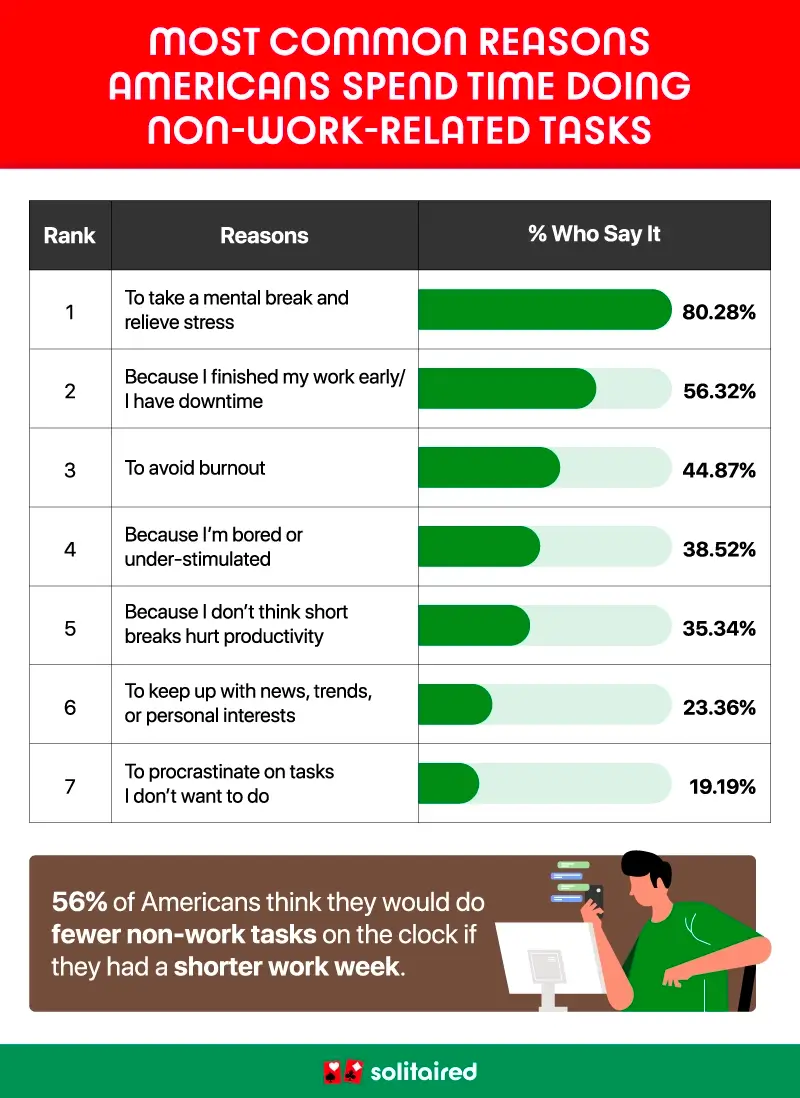
Whether it’s playing a game on your phone or shopping online, Americans can find many non-work activities to turn to during their workday. When asked why they take these breaks, we found the most common response was to take a mental break and relieve stress (80%).
Every job, regardless of the industry, can come with stressful days. From days full of meetings to tight timelines of project deliveries, our jobs can leave us feeling overwhelmed at times. By taking a few minutes to step away from work, many Americans find it helps them to mentally reset to tackle the rest of the day.
Up next as the second most common reason is because they finished their work early or have downtime, which was reported by 56% of workers. In third place, more than two fifths of
Americans report they use non-work activities to avoid burnout. Experts suggest that those struggling with burnout should try relaxing activities to help relieve tension, but they also suggest seeking help from your boss or loved ones. So if you find your non-work-related tasks stop doing the trick, try talking to your manager to find the best solution to keep you happy and healthy while on the clock.
When Work Deals You Stress, Deal Yourself a Game
While some days are easier than others, it is only natural to find yourself needing a break from work on occasions. Sure there’s a lunch break, but sometimes just taking a few minutes to yourself can help you feel refreshed and ready to tackle the rest of the day.
So when you next find yourself with some time—off the clock—and are looking for a way to unwind, Solitaired has you covered. From Spider Solitaire and Golf to Spades and Hearts, we have a variety of online games ready for you to play anywhere, any time. Get started today and feel your stress melt away as you deal yourself a hand in your favorite online games.
Methodology
In this study, we set out to learn which games are distracting Americans the most at work. To do this, we surveyed full-time workers across the country and asked about their habits regarding non-work tasks while on the clock at work.
We asked about a variety of activities from playing games, attending to digital errands, scrolling social media, and more. We then awarded points to answers representing distracted behavior while on the clock, calculated the average score by industry, and adjusted those scores on a scale of 0 to 100, with 100 representing the most distracted.
About the author